Projects
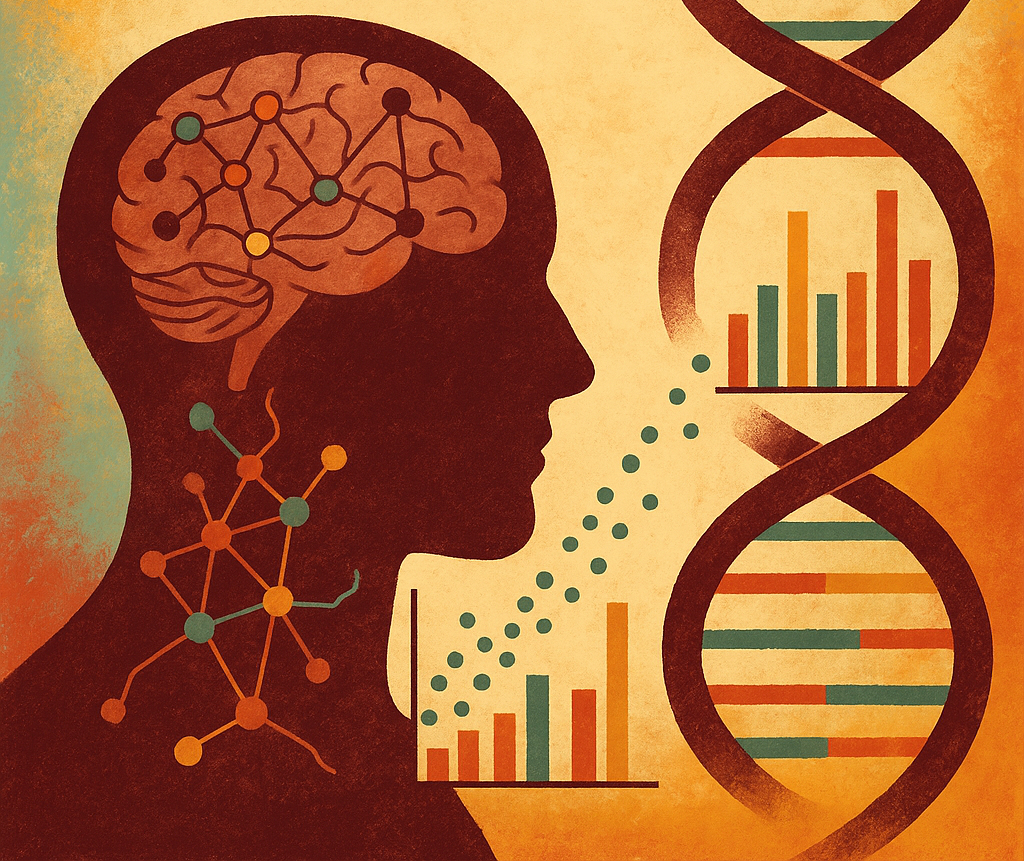
A core aspect of our research program investigates the genetic architecture of schizophrenia. Using large-scale human genetic studies from international consortia such as the Psychiatric Genomics Consortium, our work applies Mendelian randomization (Prins et al., PLoS Med 2016), polygenic risk scoring (Pouget et al., Pers Med Psychiatry 2021; Lu et al., Psychol Med 2015), LD Score regression (Pouget et al., Hum Mol Genet 2019), and statistical fine-mapping (Pouget et al., Mol Psychiatry 2025) to disentangle shared and distinct genetic influences between schizophrenia and other psychiatric and immune-related disorders.
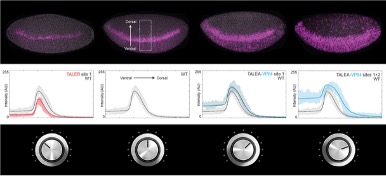
Our DECIBELmap (Dorsolateral prefrontal cortex EnhanCers fInetuning Brain gene Expression during neurodeveLopment) project integrates multimodal single-nucleus sequencing data (sn-RNAseq + sn-ATACseq measured simultaneously in the same individual nuclei) from postmortem neurotypical DLPFC spanning neurodevelopmental timepoints from fetus to adulthood to identify cell-type-specific enhancer–gene links relevant to neurodevelopment. Our maps illuminate how enhancers finetune brain gene expression in neuronal and glial cell types across the lifespan, and hold strong potential to reveal molecular pathways underlying psychosis and related psychiatric disorders. Image adapted from Crocker et al., Nature Genetics (2016).

Our IMAGINED (Integrating Medical And Genetic INformation to re-Envision Depression) Study aims to uncover the biological and clinical factors that contribute to individual differences in depression and treatment response in young people. By integrating genomic, clinical, and environmental data, we seek to better understand how genetic variation and life experiences shape long-term outcomes of depression in young people, including progression to more severe outcomes like psychosis. Our findings will help identify biological pathways that underlie depression, paving the way for earlier detection, personalized prevention, and more effective treatment strategies.